How Do You Design Game Audio That Still Works Muted?
In today’s gaming landscape, the reality is that many players experience games with their audio turned down or entirely muted. Reasons vary — some might be playing in public spaces, others prefer to focus on the visual elements, and some rely more heavily on haptics or other non-audio cues. This challenge pushes game audio designers and composers to think differently about their work: how to create an immersive experience that feels complete even when players can’t (or don’t want to) listen to the sound.
In this post, we’ll explore key strategies for designing game audio that still works muted, drawing on tools like MrQ and real-world examples from dense audio environments such as casino slots. We’ll cover:
- Interactive vs linear composition approaches
- Loop design that avoids player fatigue
- Using micro-cues and UI feedback effectively
- How non-audio channels—visual UI and haptics—can carry gameplay information
Interactive vs Linear Composition: Setting the Foundation
First, let’s clarify the two main approaches to game audio composition, since this fundamentally informs the mute-friendly design.
Linear Composition
Linear audio is like the soundtrack of a movie: it plays from start to finish as designed, without reacting to player input. This is common in indie or narrative-driven games but is less flexible for dynamic gameplay situations.
While linear tracks can be optimised with smooth loops and subtle variations, their inherent static nature means that if muted, players miss a significant portion of emotional or situational information.
Interactive Composition
Interactive audio is designed to respond to player actions, game states, and environmental contexts. This non-linear approach can create an immersive dynamic experience where sounds layer or shift depending on gameplay.
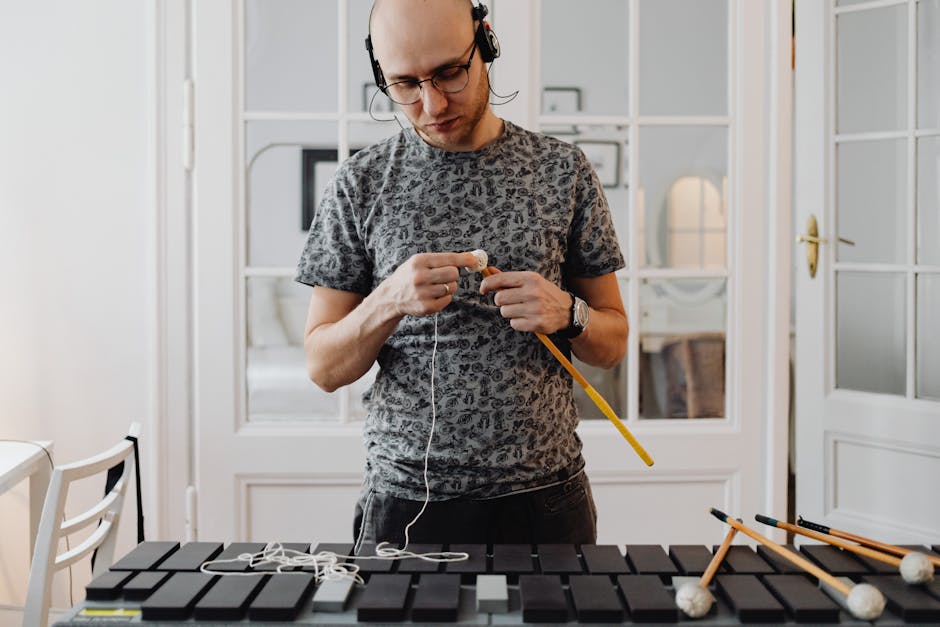
When properly executed, interactive audio systems provide more touchpoints for non-traditional cues—meaning elements like micro-cues and subtle changes contribute to gameplay feedback that complements the visual UI and haptics. This makes the experience feel more complete even when muted.
Example with MrQ: MrQ’s interactive audio engine is built to accommodate dynamic layering and adaptive sound that reacts in real time to player decisions. Using a tool like this enables designers to strategically insert or remove audio cues aligned with visual and haptic elements, so the game remains engaging with or without sound.
Loop Design That Avoids Fatigue
In many games, loops constitute the main background audio experience—think atmospheric music or environmental sounds. But if players mute the game to avoid repetitive and tiring sound loops, this defeats part of the design effort.
Key Strategies for Loop Design
- Variety is vital: Use several loop variants, alternating them seamlessly to avoid monotony.
- Dynamic layering: Instead of a static loop, allow layers to fade in and out based on gameplay intensity or player progress.
- Infuse subtlety: Incorporate low-volume ambient sounds or randomized micro-events that change loop texture over time.
Such complexity is particularly important in dense audio environments like casino slot games. Slots often have continuous looping audio, packed with jingles, mechanical noises, and celebratory sounds. To prevent fatigue, these elements must be finely tuned so mute players are not forced to compromise their gaming experience.
MrQ’s platform leverages procedural audio and layered loops designed to reduce player fatigue. This ensures the game environment feels vibrant and rewarding, but also considers those who play silently. ...well, you know.
Micro-Cues and UI Feedback: Communicating Through More Than Sound
When audio is muted, the game still needs to provide vital feedback cues to players, often delivered originally through sound. This is where micro-cues and UI feedback shine.
What Are Micro-Cues?
Micro-cues are brief, subtle signals that convey important information, such as confirming a button press, alerting to an event, or indicating a change in status. In audio, these could be short blips or tonal shifts—but their role is equally critical when translated into visual or haptic domains.
Enhancing Visual UI
- Animated button states: For instance, pressing a button may trigger a quick glow, shrink/grow animation, or colour shift.
- Iconic feedback: Use symbols or motion graphics that clearly relate to in-game outcomes, like flashing stars for success or pulsing outlines to draw attention.
- Progress bars and timers: Clear visual metrics can replace audio countdowns or alerts.
Leveraging Haptics and Non-Audio Cues
Haptic feedback—vibration or tactile responses from controllers and devices—is an essential complementary channel. For games running on smartphones or consoles, developers can synchronise haptic pulses with important game events to signal success, errors, or alerts without needing sound.
Non-audio cues extend beyond vibration. These include:
- Screen shake or camera movements
- Visual particle effects (sparkles, smoke, bursts)
- Environmental changes like lighting shifts or shadows
Combination is key: When visual UI and haptics are combined thoughtfully with micro-cues, they can replace many traditional audio feedback functions, allowing games to remain intuitive and satisfying even muted.
Casino Slots: A Case Study in Dense Audio Environments
Casino slot games represent one of the most densely packed audio environments in gaming. (why did I buy that coffee?). The constant spinning reels, winning chimes, button presses, background music, and celebratory effects create an audio landscape that can quickly overwhelm players or create fatigue.
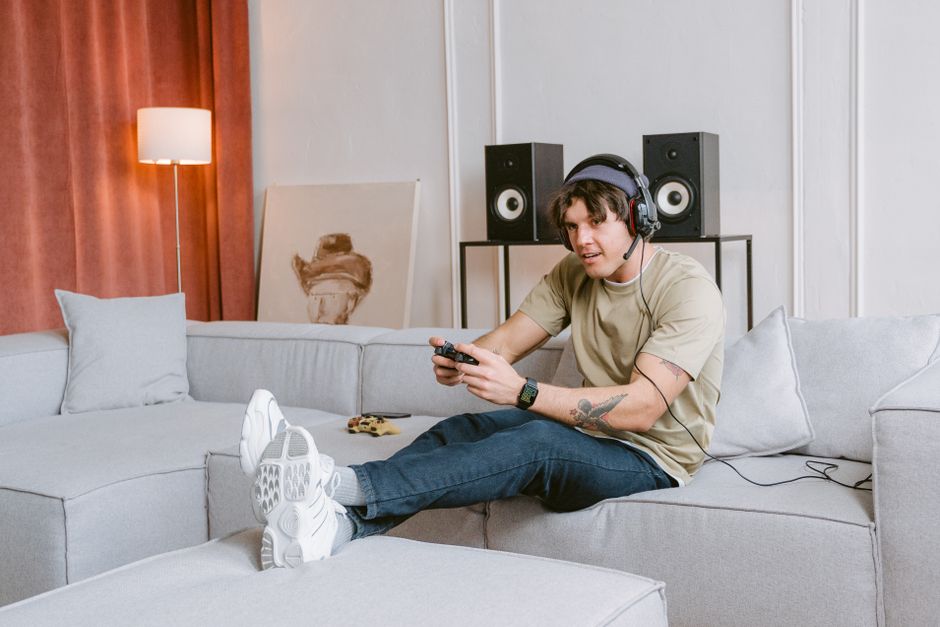
Designing these games for mute-mode play is a unique challenge because many traditional feedback mechanisms are sound-driven. Here’s how leading platforms like MrQ address it:
Visual UI Design
- Bright, colourful animations: Highly visible reel spins, flashing lights, and winning line highlights keep players visually engaged.
- Clear win indicators: Visual enhancements such as cascading coins or fireworks indicate jackpot wins.
- Button response animations: Instant visual acknowledgement when players interact, encouraging confidence.
Haptic Integration
When players spin reels, the controller vibrates subtly, simulating the tactile sensation of mechanical slots. Wins trigger stronger, celebratory haptic pulses, substituting audio cheers.
Thoughtful Use of Loop Variants
Background loops dynamically shift based on player activity, with volume modulation ensuring they are unobtrusive for potential mute users.
Micro-Cue Synchronisation
Small visual flourishes and haptic pulses coincide with moments that would normally be marked by short audio blips, reinforcing gameplay messages.
Summary Table: Designing for Muted Gameplay
Aspect Audio Design Visual & Non-Audio Alternatives Tools/Techniques Composition style Use adaptive, interactive loops Synchronise visuals with gameplay layers MrQ interactive engine Loop design Multiple variants, dynamic layering Visual ambient changes, thematic UI Procedural audio, visual particle systems Feedback (micro-cues) Short blips, tonal shifts Button animations, visual flashes, haptics UI animation frameworks, vibration APIs Dense audio environments Layered sounds, volume fade Bright UI effects, haptics synchronization Integrated audio-visual workflow (e.g. MrQ)Final Thoughts
Designing game audio that still works when muted is not about replacing sound altogether—it’s about creating a holistic, multimodal player experience. By embracing interactive composition, smart loop design, and reinforcing teds-list.com key gameplay feedback through visual UI and haptics, game developers can make their games more accessible, enjoyable, and inclusive.
Tools like MrQ demonstrate how advanced audio engines can support these goals by enabling adaptive audio tied closely to the visual and tactile elements of gameplay. The result? Games that feel alive and rewarding, even when played in silence.
If you’re designing for today’s diverse gaming audience, consider how your audio interacts with—and supports—these non-audio cues. The best games speak to all the senses, whether or not they ‘make a sound’.